
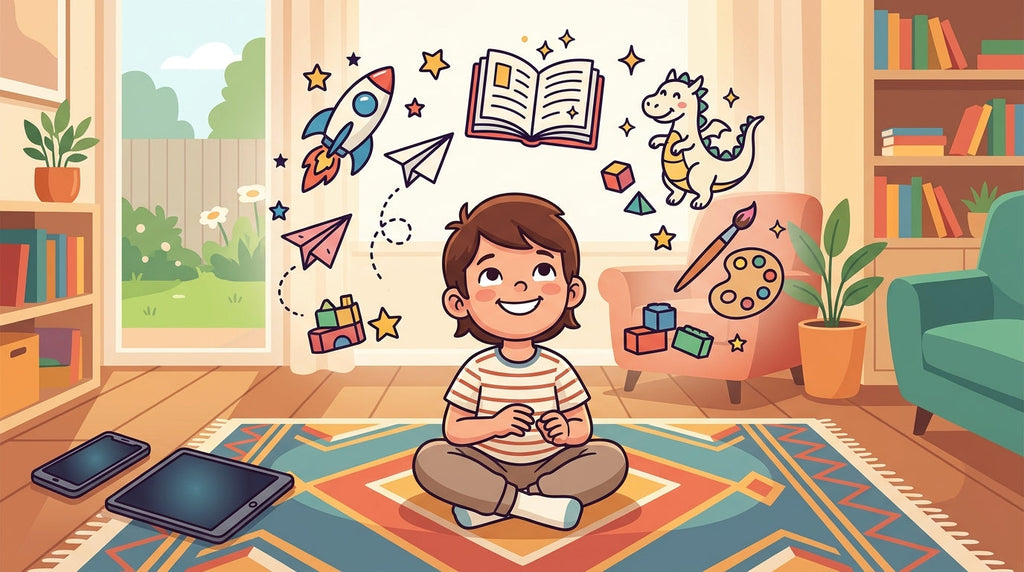
Why Kids Still Need Boredom in a Digital World
In a world filled with smartphones, tablets, gaming consoles, streaming platforms, and endless digital entertainment, children rarely have to wonder what to do next. The moment they feel bored, there is usually a screen ready to provide instant entertainment.
But is boredom really something parents should always try to eliminate?
Not necessarily.
Boredom can be an important part of childhood. When children are given time away from screens and constant entertainment, they have an opportunity to think, explore, imagine, create, and discover activities on their own. Instead of waiting for a device to provide stimulation, they learn to create their own.
This doesn't mean technology is bad or that children should never use screens. Digital devices can provide education, communication, creativity, and entertainment. The challenge is finding a healthy balance and making room for something that modern childhood increasingly lacks: unstructured play and boredom.
What Is Boredom, and Why Does It Matter?
Boredom is the feeling of having nothing interesting or immediately available to do. For children accustomed to constant digital stimulation, even a few quiet minutes can feel uncomfortable.
A child may say, "I'm bored," expecting a parent to provide an activity or a device to solve the problem. However, that moment can actually become an opportunity.
When children aren't immediately entertained, they are encouraged to ask themselves:
- What can I do?
- Can I create something?
- Can I play a game?
- Can I build something?
- Can I go outside?
- Can I invent my own activity?
This process encourages children to become active participants rather than passive consumers of entertainment.
How Excessive Screen Entertainment Changes Play
Digital entertainment is designed to capture and maintain attention. Videos automatically play one after another, games provide immediate rewards, and social platforms constantly offer new content.
This creates an environment where children are rarely required to wait, imagine, or create their own entertainment.
Traditional play works differently.
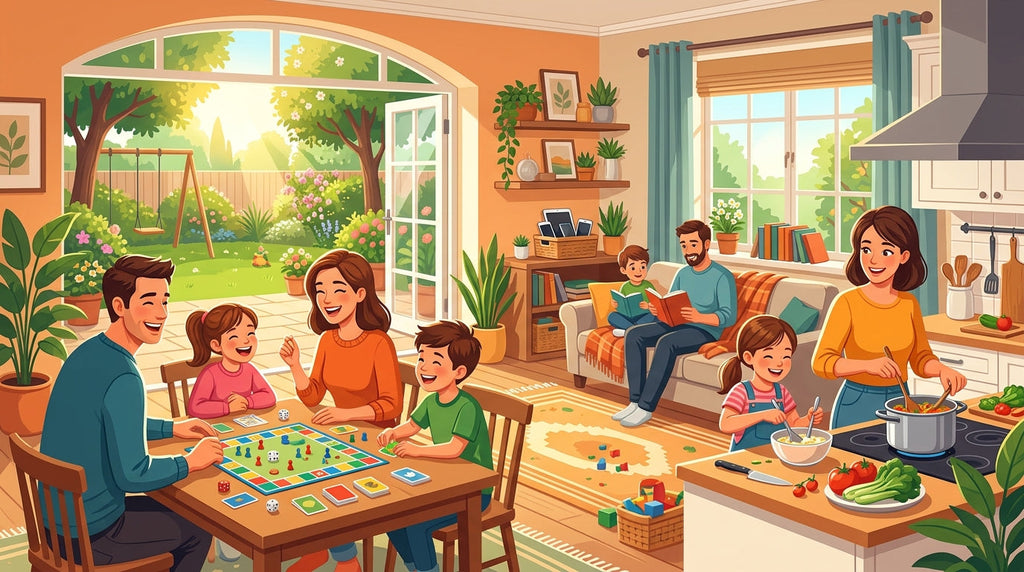
A child playing Ludo has to roll the dice, make decisions, interact with other players, and accept the outcome. A child playing Chess has to think ahead. Building with blocks requires imagination. Outdoor games require movement and often involve cooperation, competition, and problem solving.
These activities don't simply entertain children, they require children to do something.
That difference matters.
Boredom Can Encourage Creativity
One of the biggest benefits of boredom is that it creates space for creativity.
When every free moment is filled with digital content, children have fewer opportunities to invent their own games, stories, challenges, and activities. When entertainment isn't immediately available, imagination has room to take over.
A child with nothing to do might turn a cardboard box into a house, create a game with friends, draw a story, build something from household objects, or invent new rules for a familiar game.
These experiences may seem simple, but they help children practice creative thinking and independent decision-making.
Sometimes, having nothing to do is exactly what inspires children to create something new.
Boredom Helps Develop Independent Thinking
Children eventually need to learn how to manage their own time and make decisions without someone constantly telling them what to do.
Unstructured free time provides an opportunity to practice this skill.
Instead of hearing, "Here's what you should watch," or "Here's the game you should play," children can decide for themselves.
They learn to:
- Make choices independently
- Explore their interests
- Solve problems creatively
- Start activities without being instructed
- Manage their free time
- Become comfortable without constant stimulation
These are valuable life skills that extend far beyond childhood.
The Connection Between Boredom and Physical Play
Boredom can also be a powerful gateway to physical activity.
When a screen isn't available as the default source of entertainment, children may naturally look for something else to do. That could mean riding a bicycle, playing cricket, kicking a football, jumping rope, playing tag, or joining friends for a board or physical game.
Physical play provides benefits that sitting in front of a screen cannot fully replace.
Running, jumping, throwing, balancing, and moving help children develop coordination, strength, balance, and motor skills. Games involving other children also teach communication, teamwork, patience, and conflict resolution.
This is why reducing screen dependency isn't simply about spending less time on devices. It's about making room for better alternatives.
Boredom Teaches Children That Not Every Moment Needs Entertainment
Modern life offers almost unlimited entertainment. A child can watch videos while eating, play games while traveling, and use a phone whenever they have a spare minute.
As a result, quiet moments can begin to feel uncomfortable.
Learning to tolerate boredom is therefore valuable.
Children don't need to be entertained every minute of every day. Quiet time can allow them to think, observe their surroundings, talk with family members, read, draw, build, or simply rest.
Being comfortable with occasional boredom can help children become less dependent on external stimulation.
Conclusion: Let Children Be Bored Sometimes
In a digital world, boredom can feel like a problem that needs to be fixed immediately. But sometimes, boredom is the beginning of something better.
It gives children space to discover their imagination, develop independence, interact with others, and find enjoyment beyond a screen.
Parents don't need to eliminate technology from their children's lives. Instead, they can create a healthier balance by making physical games, outdoor activities, creative hobbies, and unstructured play accessible and enjoyable.
The next time your child says, "I'm bored," don't rush to reach for a screen.
Give them a little time.
Give them some space.
Give them the opportunity to discover what they can do when entertainment isn't handed to them.
Because sometimes, the best thing a child can do with nothing to do is create something of their own.
Related post
28
Aug
28
Aug
27
Aug

27
Aug


